“There is so much happening that divides us, and it’s essential that we create and share time together. One aspect of today’s world is to push to be like others and follow trends. It doesn’t lead to the place where one feels most alive.”
Angelina Jolie
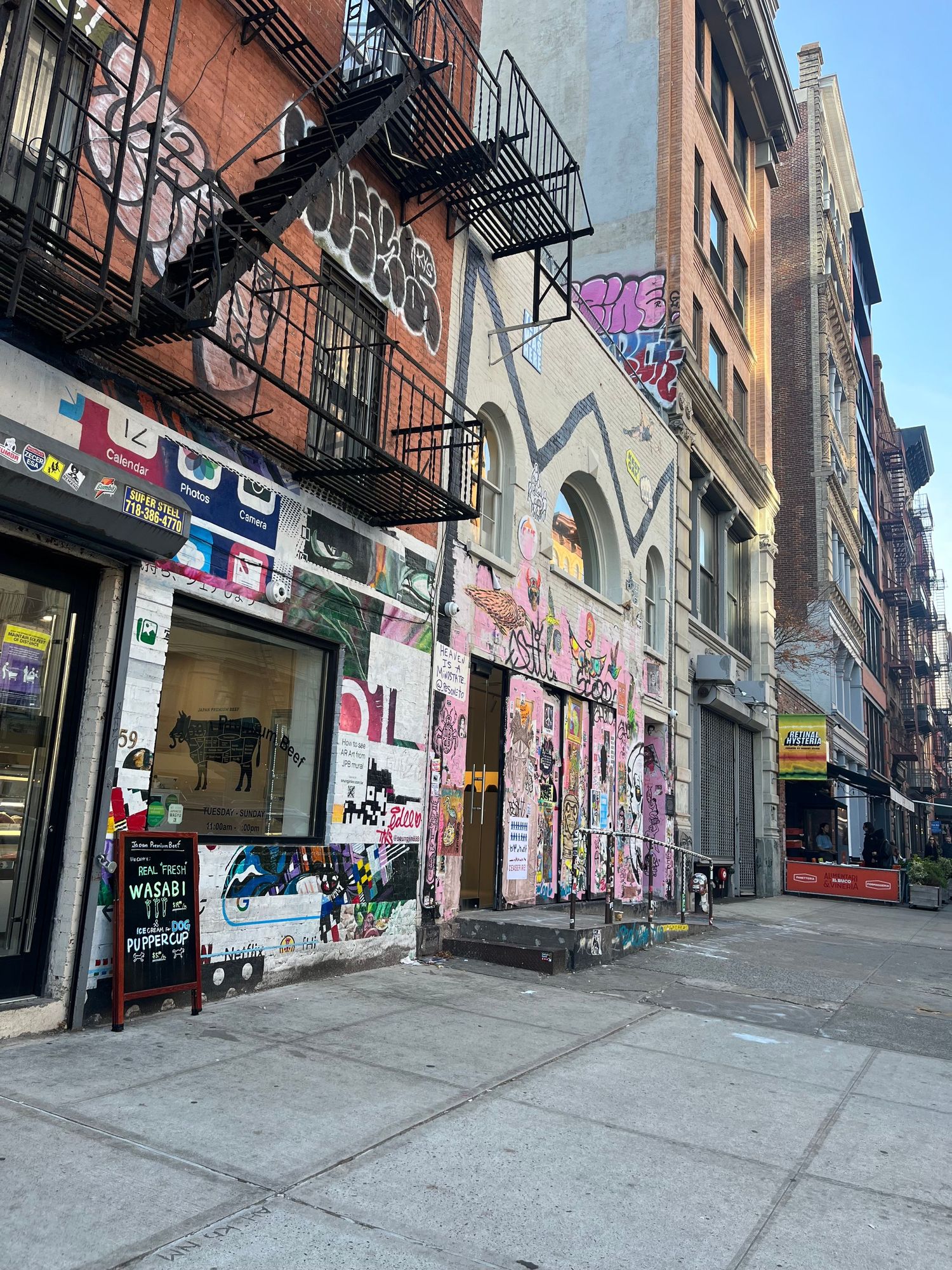
57 GREAT JONES STREET
ATELIER JOLIE
Atelier Jolie opened its doors at 57 Great Jones Street, welcoming creatives everywhere to play in its space and paint on the walls. It was my pleasure to visit the location and throw some paint myself. The environment created by Angelina Jolie nourishes expression and artistic freedom for all. Offering a collection of versatile garments crafted by local artists and a cafe run by NYC’s very own Eat Offbeat. Home to skilled artisans and tailors waiting to work with you to bring your dream garment to life.
In a fashion industry that's undergoing an evolutionary change, Atelier Jolie is setting a new standard
Atelier Jolie opened its doors to the public on Tuesday, December 5th, 2023. The creative space is housed in the historic landmark, 57 Great Jones Street. The location was formally the home of artist Jean-Michel Basquiat who lived and worked in the space from 1983 to his death in 1988. Basquiat first became known on the art scene as “SOMO” who branded witty aphorisms onto subway cars and buildings in Manhattan. He was known for challenging racial and societal expectations along with the traditional ideals of art, incorporating graffiti and a crown motif symbolizing the empowerment of black people as royals and saints, into his art. Basquiat became close friends with artist Andy Warhol in 1980, leading to their many collaborations including the iconic Olympic rings (1985), Arm and Hammer II (1984) along with over 150 collaborative artworks now sold for tens of millions of dollars.
Angelina has promised not only not to paint over the mural of artwork on the face of the building, but refuses to even hang a sign, as she sees it would devalue the art of the creatives before her.
As a young girl in her twenties with a love for fashion, I grapple with the idea of shopping when the impacts of the industry loom over my head. The fashion production sector alone accounts for 10% of the planet’s greenhouse gas emissions. According to the World Economic Forum, 85% of all textiles go to the dump each year. And washing some types of clothes sends thousands of bits of plastic into the ocean. (These Facts Show How Unsustainable the Fashion Industry Is, 2020)
I feel as though I speak for the majority when admitting shamefully that even I shopped fast fashion due to a lack of education on the subject. Fast fashion produces trending looks for cheap. As twenty-somethings, it’s more fun and financially attainable to buy a $6 top-of-the-moment. (along with a few more tops, bottoms, and accessories for under $50) Rather than invest in high-quality and timeless pieces. This is a gentle reminder that 93% of brands don’t pay garment workers a living wage. (Fashion Checker) Maybe your outfit cost you $15, but it might have cost someone else their life. In 2013, the Rana Plaza building, an eight-story building in Bangladesh collapsed. This building housed several garment factories that killed over 1,100 workers and injured over 2,500 people. Investigations showed that the owner built top floors without permits and forced workers to operate despite the clear safety hazards. (Larisa Epatko, 2018)
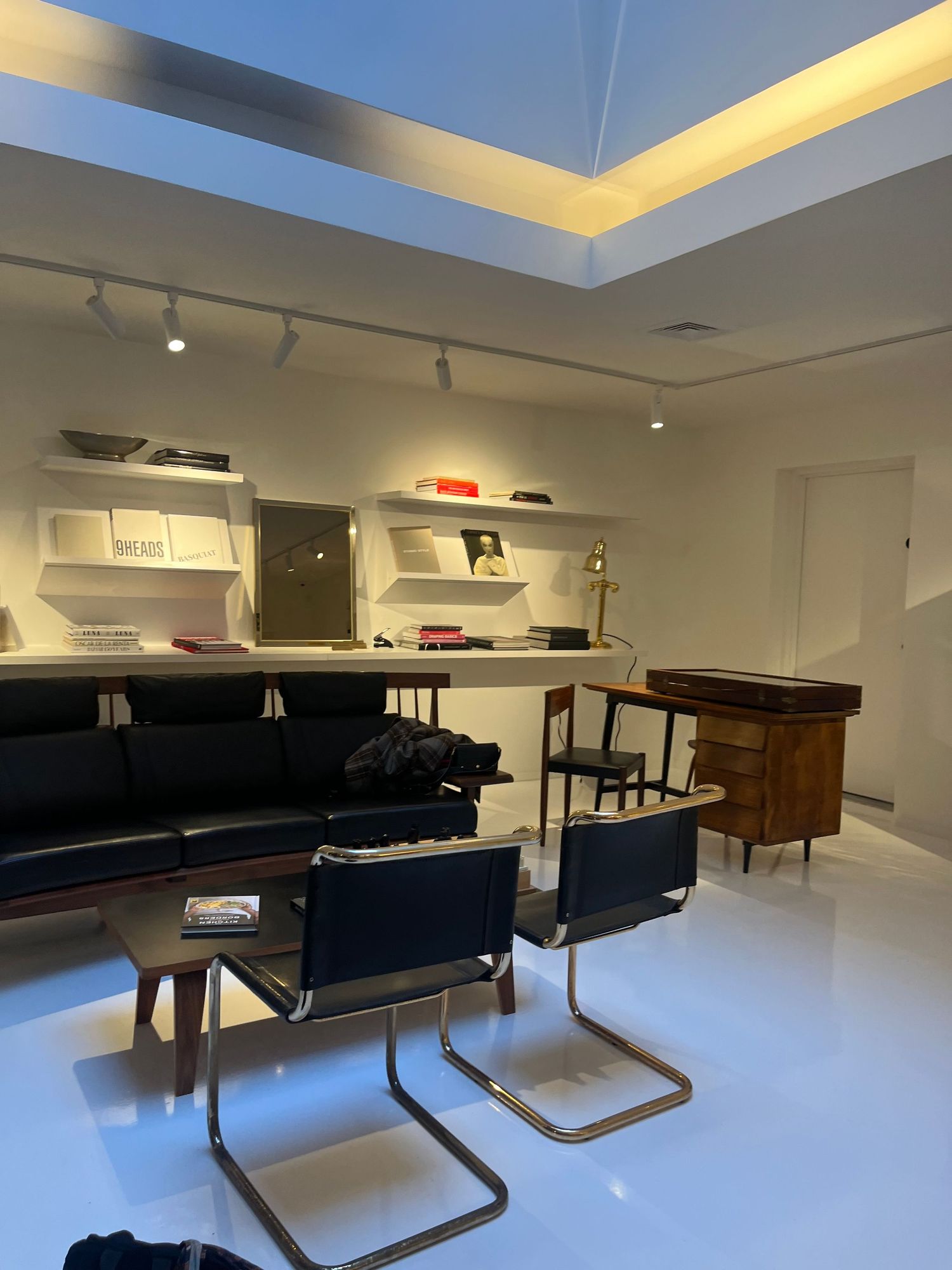
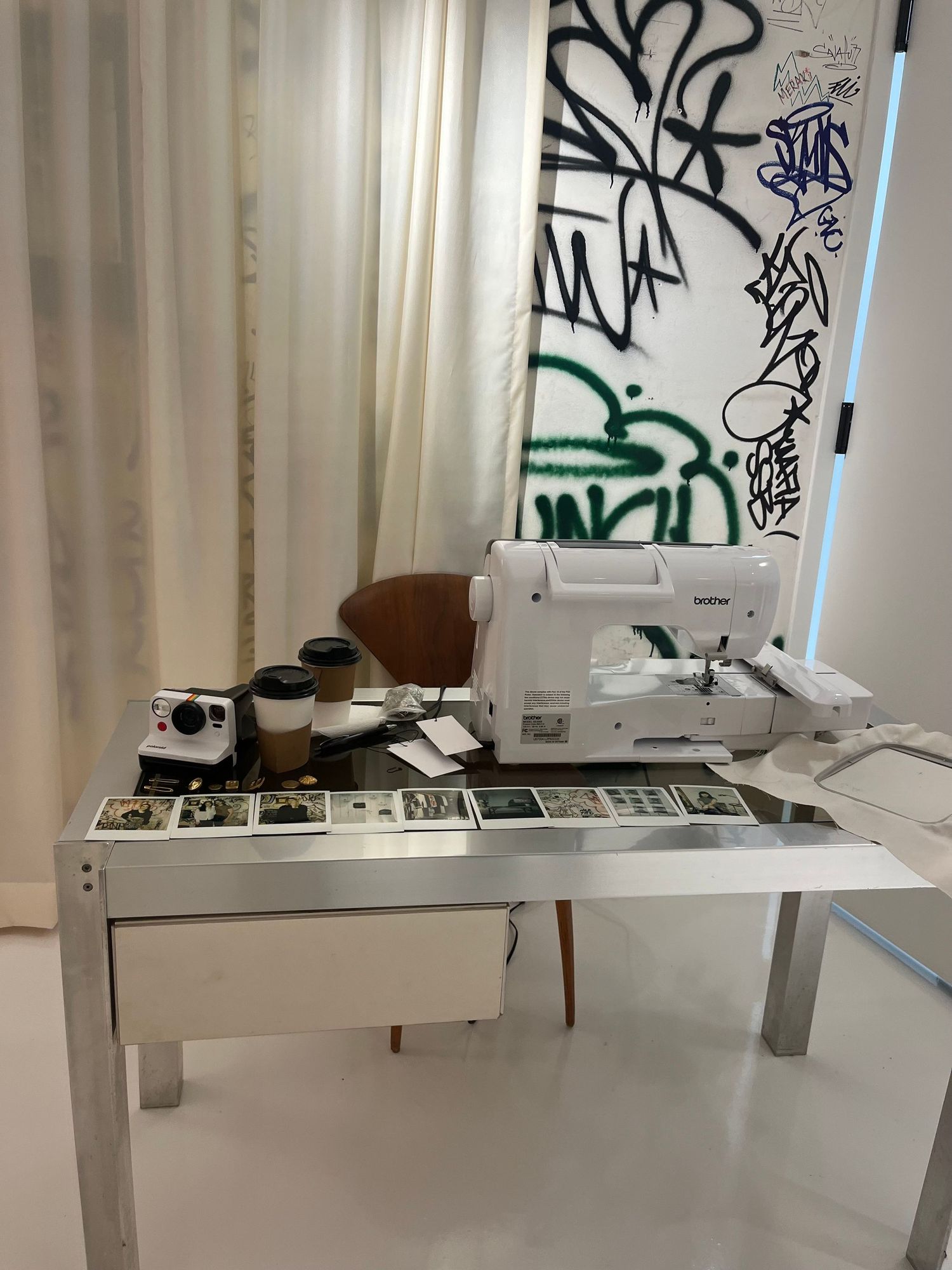
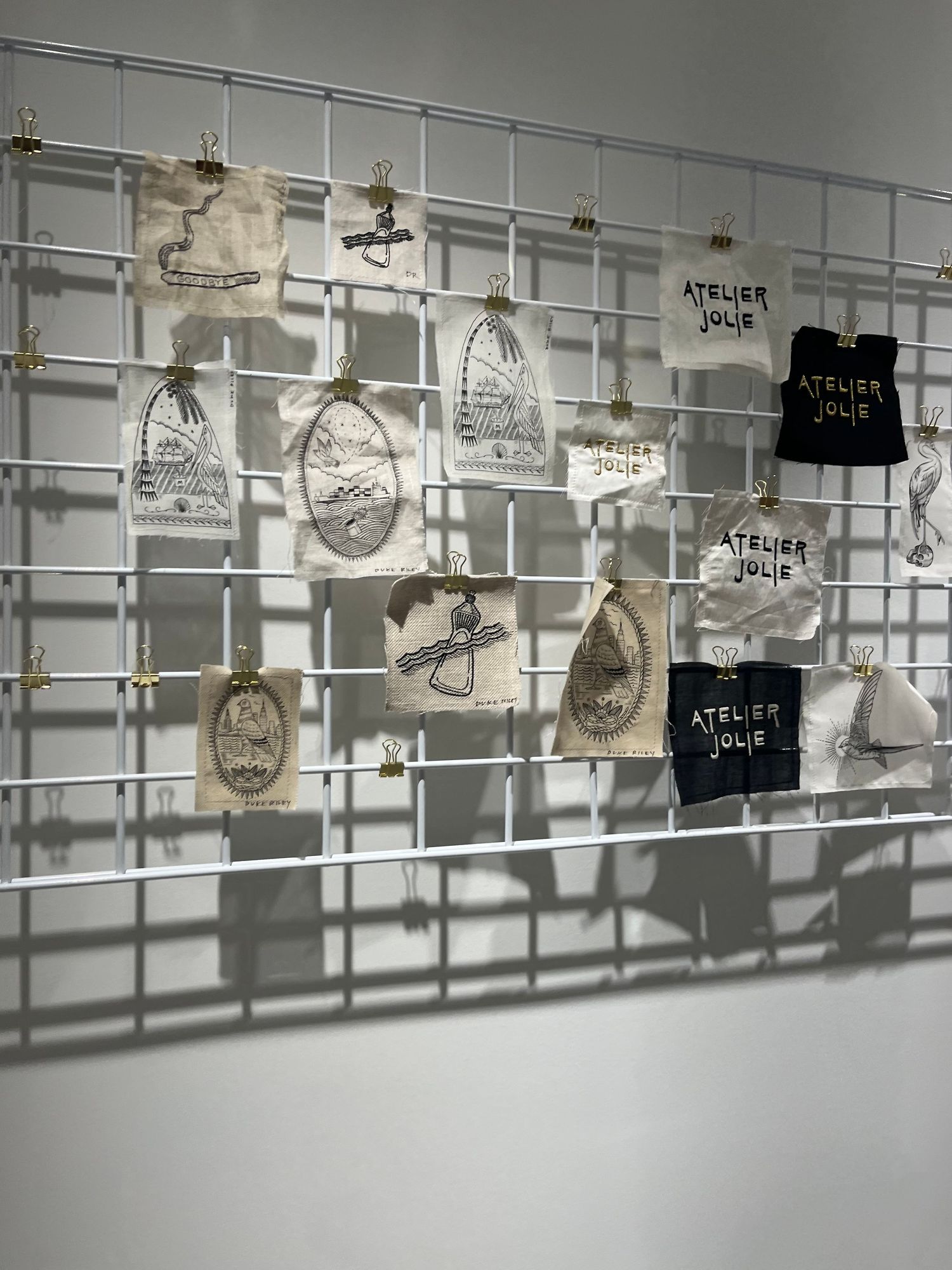
Atelier Jolie is a fashion collective founded by Angelina Jolie to create a creative and collaborative place to celebrate self-expression, sustainability, and skilled craftsmanship.
In describing the retail space, Angelina said “We are a collective that aims to show that an ethical and sustainable lifestyle isn’t a lesser life with limitations….It is a better quality of life with personal creativity and community at its center.” (Harper’s Bazaar)
Angelina’s collection, which she deems is not her collection but the collection of many artists' works, made with deadstock and vintage materials. Shoppers can work with Atelier Jolie personally in a face-to-face setting to customize pieces in the collection. Angelina admits that she will “probably lose money” in a recent interview with the Wall Street Journal. (Contino) She then went on to state “If I can eventually put into practice some things that I think are improvements and I just break even, that’s a huge victory.” (Contino) The team members have been trained in cutting and sewing to help guide in-house alterations including tailoring, patchwork, embroidery, painting, or screen-printing. This is all free of charge with the purchase of an item in the collection. This sustainability practice also means that you can bring an item back for repair or to be upcycled into a new piece. Anyone is welcome to bring their own vintage or deadstock fabrics to the shop and team members will help you create your one-of-a-kind piece. Angelina hopes to provide an opportunity for small-scale and developing designers to have a creative space to collaborate, grow, and support themselves.
When asked about entering the fashion industry as an emerging designer with Imran Ahmed from BOF Angelina stated, “I’m not interested in becoming a known designer,” she says. “I’m interested in being a part of a good family. … I built more of a home and I’m one of the creators that play in the home.” Unsurprisingly considering the humanitarian she is, Angelina understands “who gets credit” (Ahmed) at the end of the day for designs despite the time, talent, and craftsmanship put forth by those constructing garments from a sketch to reality. She has recognized the unfairness in the industry and not only wishes to harness creativity but also set an example of the much-needed evolution when it comes to the standards set for those manufacturing and producing our garments.
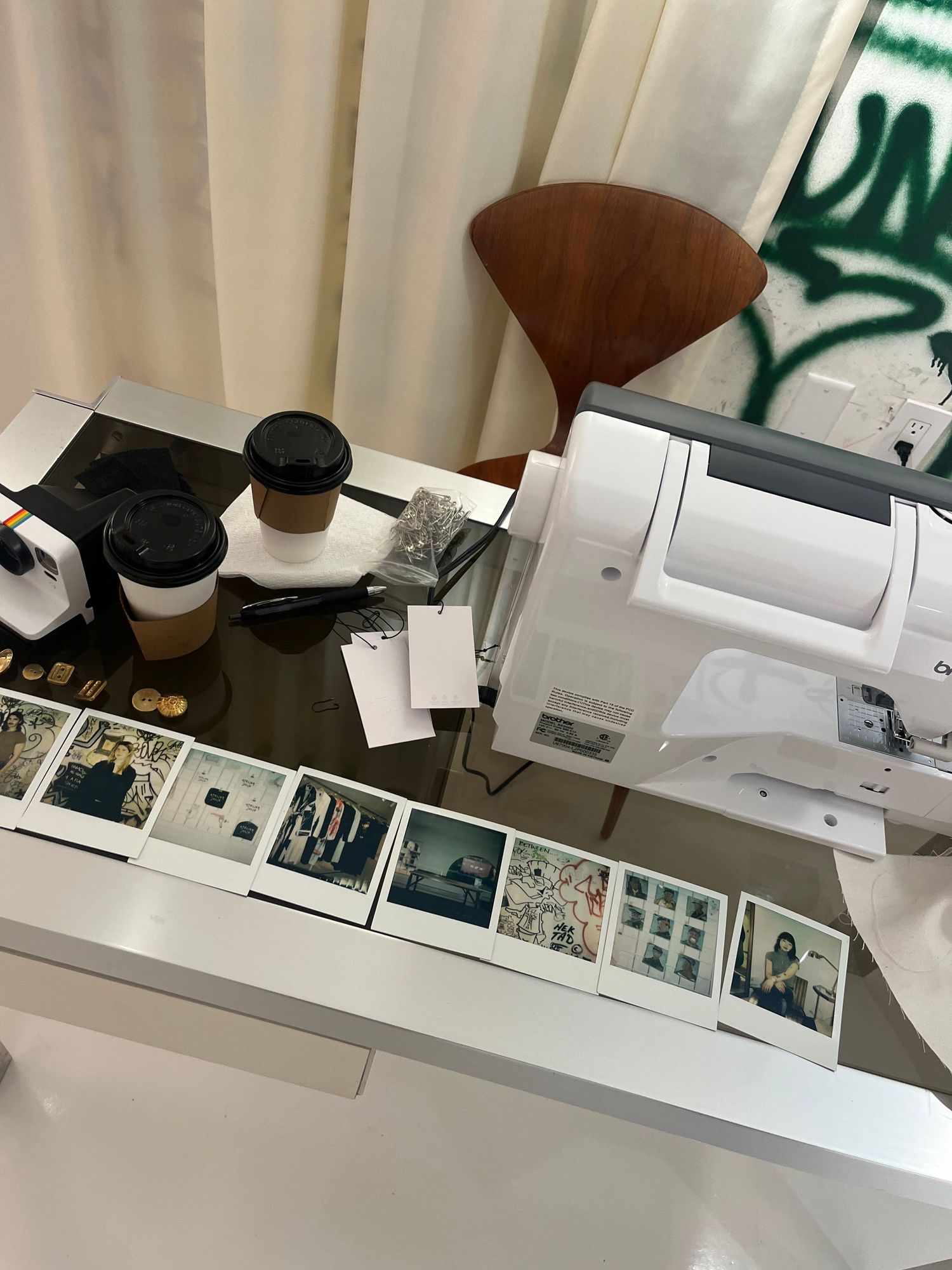
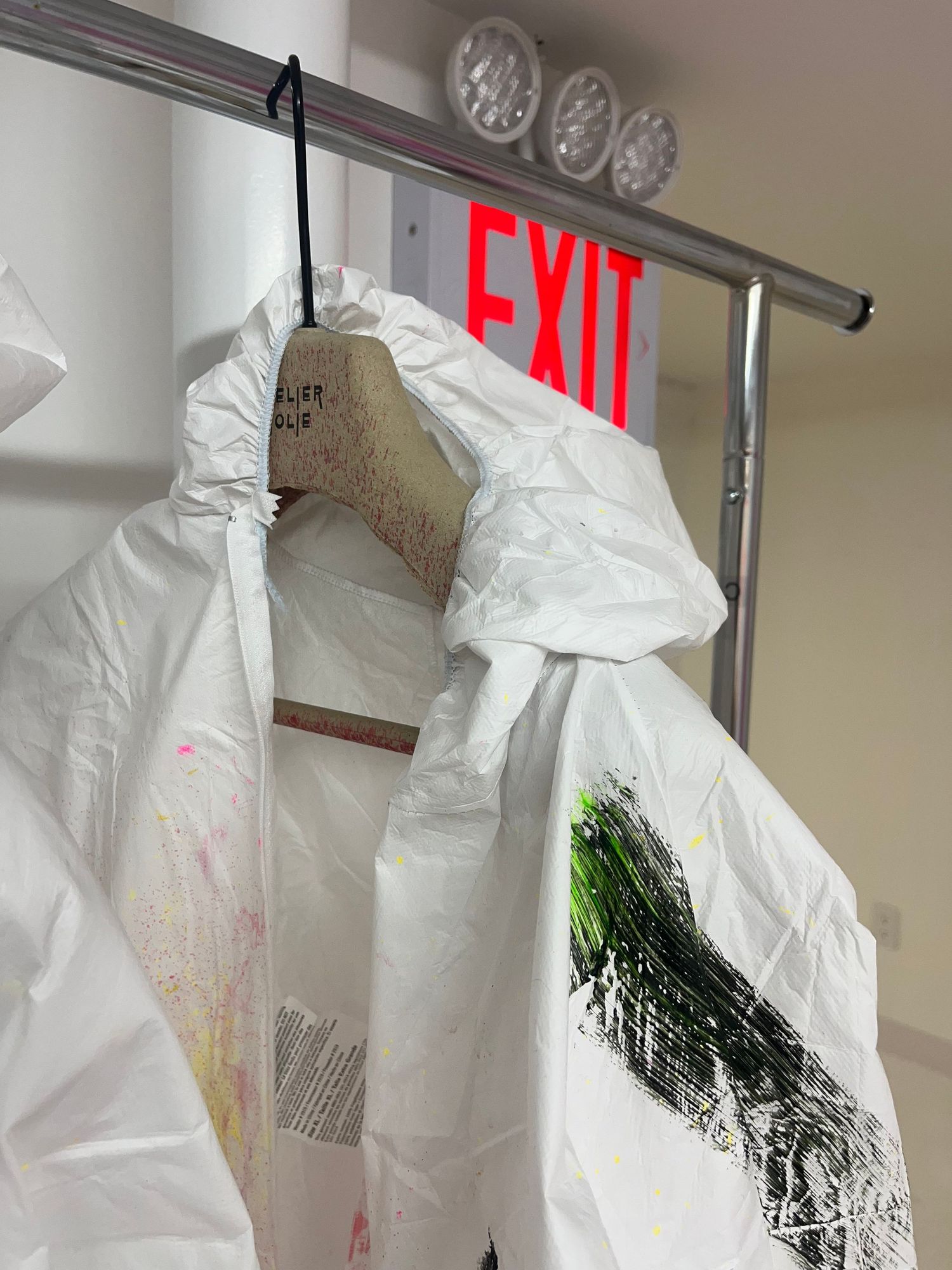
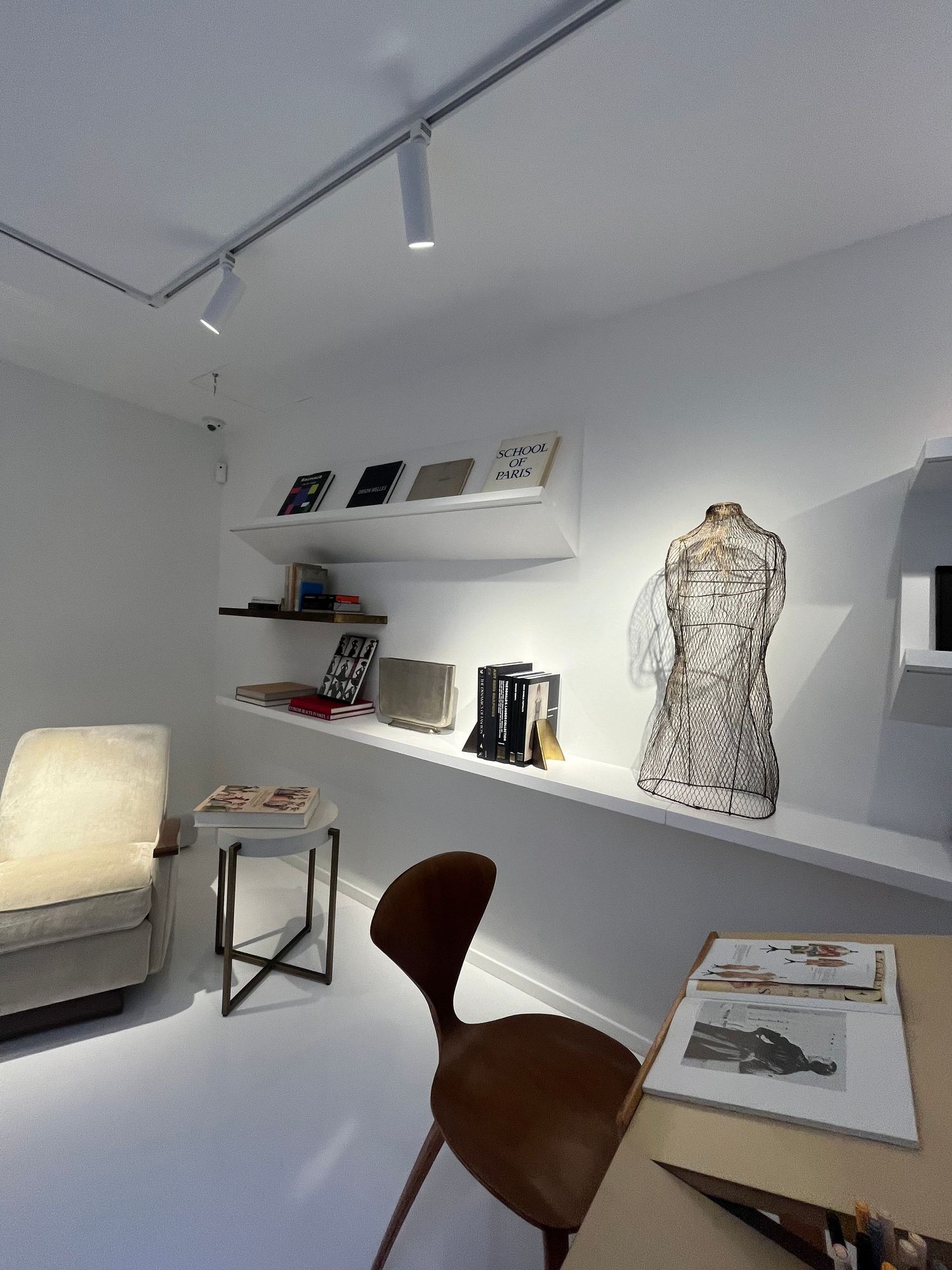
Walking into Atelier Jolie you are welcomed by staff who are students or alumni from fashion schools including Parson’s School of Design. I had the chance to speak to an employee my age who was knowledgeable and welcoming, unlike the usual somewhat intimidating precedent for a luxury showroom space.
After viewing Angelina’s collection, a range of basics that can be seamlessly mixed and matched, customers can walk downstairs to the “graffiti room” a white room coated in paint splatter by customers and creatives. Angelina states “Discovery and mistakes are essential for creativity. The once-young punk in me wanted to push against what was normal and paint the walls with the people I love. I hope others do, too.”(Bobb) While you can purchase a piece from the collection for customization, Angelina offers an affordable option of a $15 plain t-shirt or pair of pants for visitors to paint, color, or whatever they imagine.
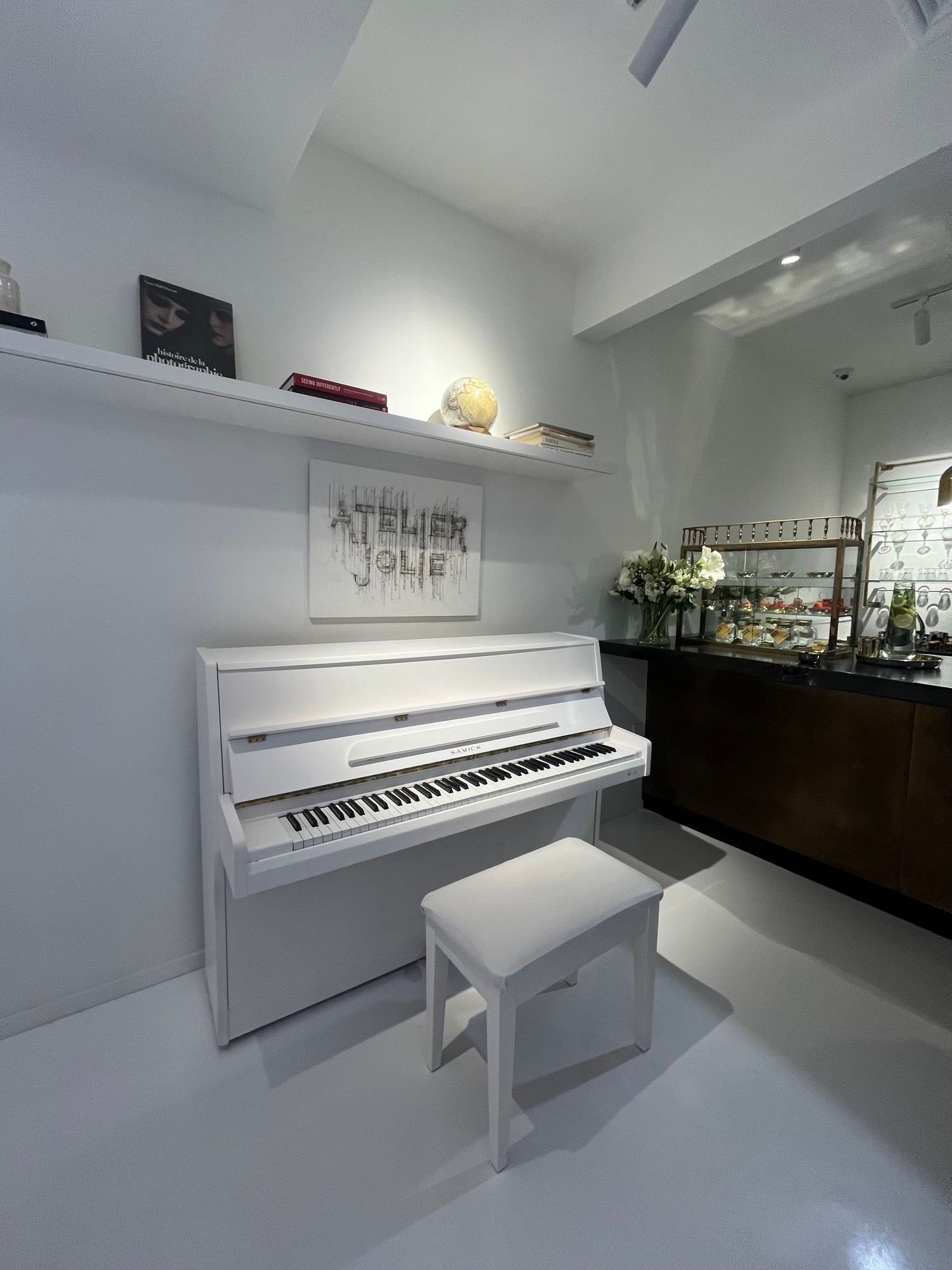
Upstairs Atelier Jolie also houses a cozy cafe which is run by “Eat Offbeat” a NYC restaurant and cooking community that highlights the talents of refugees. The cafe has comfortable seating and is styled to breathe creativity and act as a place to relax and brainstorm artistic ideas. While not open without an appointment, the back of the ground floor is where screen printing and patching take place, along with upstairs housing tailors and seamstresses to bring every creative dream to reality.
Overall, Atelier Jolie is a safe space for all creatives to harness creativity and set an example of sustainability for not only consumers but also other industry participants. “There is so much happening that divides us, and it’s essential that we create and share time together. One aspect of today’s world is to push to be like others and follow trends. It doesn’t lead to the place where one feels most alive.” (Contino)