Determining Your Undertone
By McKinsey Siwald
Images are not my property.
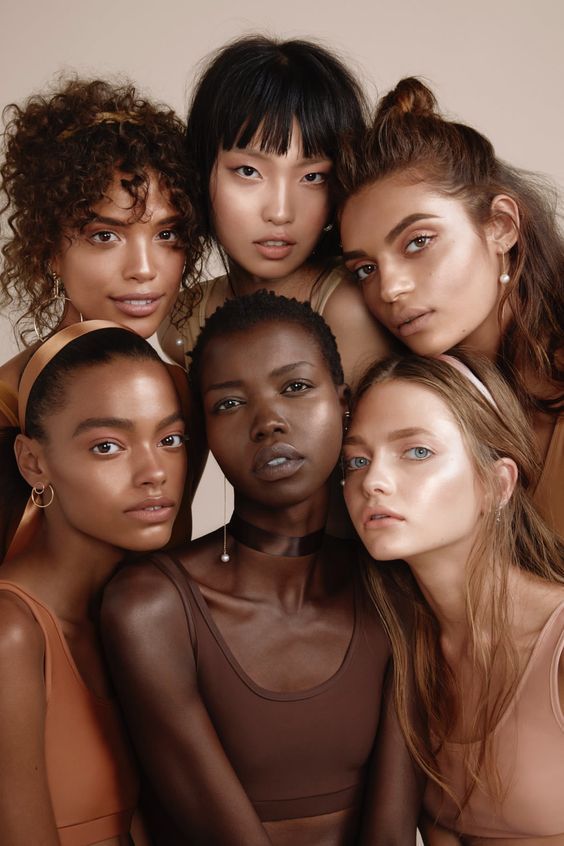
Image from pinterest (2024)
Why is it important to know my undertone?
Understanding your undertone helps you select clothing, makeup, and accessories in colors that enhance your natural complexion. Wearing colors that suit your undertone can make your skin look more radiant and healthy, while the wrong colors can make you look washed out or tired.
Foundation, concealer, and blush shades should match your undertone for a natural look. For instance, a foundation with a yellow base suits warm undertones, while one with a pink or blue base suits cool undertones. This knowledge helps you avoid mismatched makeup that doesn't blend well with your skin.
Colors that complement your undertone can enhance your eyes, hair, and overall appearance. This can be particularly useful in styling and personal branding, where presenting yourself in the best light is important.
Knowing your undertone can guide you in building a wardrobe with colors that consistently flatter you, making it easier to mix and match pieces. This can lead to a more cohesive and versatile style.
Wearing colors that complement your undertone can boost your confidence, as you feel more comfortable and stylish in your clothes and makeup. This knowledge also allows for more effective personal expression, as you can choose colors that reflect your personality and mood.
By knowing your undertone, you can save time and money by avoiding purchasing clothes and makeup in colors that don't suit you. This can lead to a more curated and efficient wardrobe and makeup collection.
Pinpointing your skin tone's undertone.
Your undertone is the subtle hue beneath the surface color of your skin that affects its overall appearance.
This is NOT to be confused with the color of your skin itself. It can be warm, cool, or neutral, and it influences which colors in clothing, makeup, and accessories complement you best
Warm Undertone
Your skin has yellow, peach, or golden hues. You might tan easily and look good in gold jewelry.
Veins: Greenish
White paper test: yellow tint
Tan: Your tan consists of a peachy, golden, or olive tone.
Neutrals Test: Look best in off-white and shades of brown
Jewelry Test: Gold jewelry is often more favored by warm skin tones
Neutral Undertone
A mix of warm and cool undertones, where both gold and silver jewelry suit you.
Veins: Blueish or green
White paper test: green or grey tint
Tan: No dominant undertone and your skin tends to tan and burn equally as often.
Neutral skin tones can find both true colors and shades of brown along with off-white flattering.
Neutral skin tones will find both gold and silver jewelry flattering
Cool Undertone
Your skin has pink, red, or blue undertones. You may burn before tanning and look better in silver jewelry.
Veins: Blue
White paper test: pink tint
Tan: Burn easy or pink in the sun. Tans tend to have a reddish hue.
Neutrals Test: True colors look best, such as true blacks and whites.
Jewelry Test: Silver jewelry is often more favored by cool skin tones
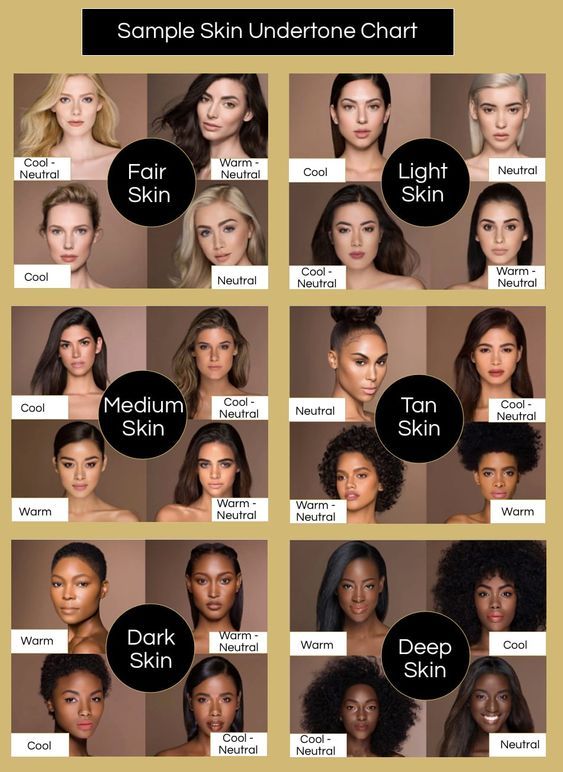
Image from Pinterest (2024)
5 Common Misconceptions of Undertone
Understanding these misconceptions can help you better identify your undertone and choose colors that complement your natural complexion.
1. Misconception: "Undertones Are the Same as Skin Tone"
Some people think that undertones and skin tone are the same. However, skin tone refers to the surface color of the skin (like light, medium, or dark), while undertone refers to the subtle hue beneath the surface
Reality:
Undertones are independent of skin tone. For example, someone with a light skin tone can have a warm undertone, just as someone with a dark skin tone can have a cool undertone
2. Misconception: "You Can Tell Your Undertone by Looking at Your Skin"
Some believe that simply looking at their skin in the mirror can reveal their undertone.
Reality:
Undertones are not always obvious, and surface color can be affected by factors like sun exposure, health, or even makeup. It often requires specific tests, like examining veins or testing different colored fabrics, to determine undertones accurately.
3. Misconception: "All People of a Certain Ethnicity Have the Same Undertone"
There's a belief that all individuals from a particular ethnic background have the same undertone.
Reality:
People of any ethnicity can have warm, cool, or neutral undertones. There is no universal undertone for any racial or ethnic group.
4. Misconception: "Vein Color Always Indicates Undertone"
It's commonly suggested that blue veins indicate cool undertones, green veins indicate warm undertones, and a mix suggests neutral undertones.
Reality:
While vein color can be a helpful indicator, it’s not definitive for everyone. Some people have trouble discerning vein color, or their veins may appear more neutral due to the skin’s natural pigmentation.
5. Misconception: "Undertone Is Static and Never Changes"
Some think that once you identify your undertone, it never changes.
Reality:
While undertones are generally consistent, factors like aging, hormonal changes, and prolonged sun exposure can subtly alter your undertone over time.
Once you've found your undertone, you can utilize this knowledge to determine your color season
Knowing your color season helps you identify which colors best complement your natural features, such as your skin tone, hair, and eye color. This understanding allows you to choose clothing, makeup, and accessories that enhance your overall appearance, creating a harmonious and flattering look. It simplifies shopping and styling decisions, ensuring you select colors that complement your unique palette and help you look your best.